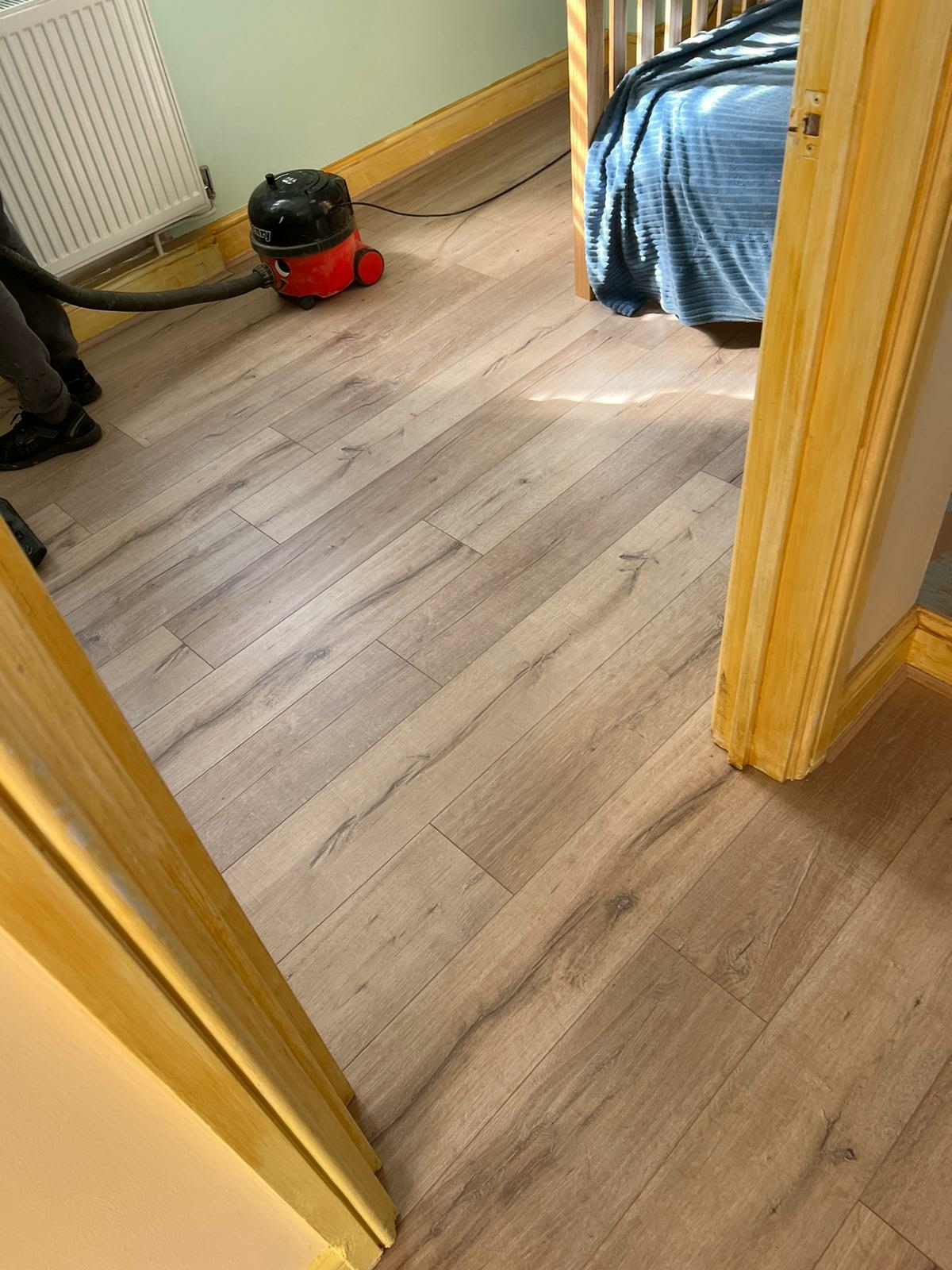
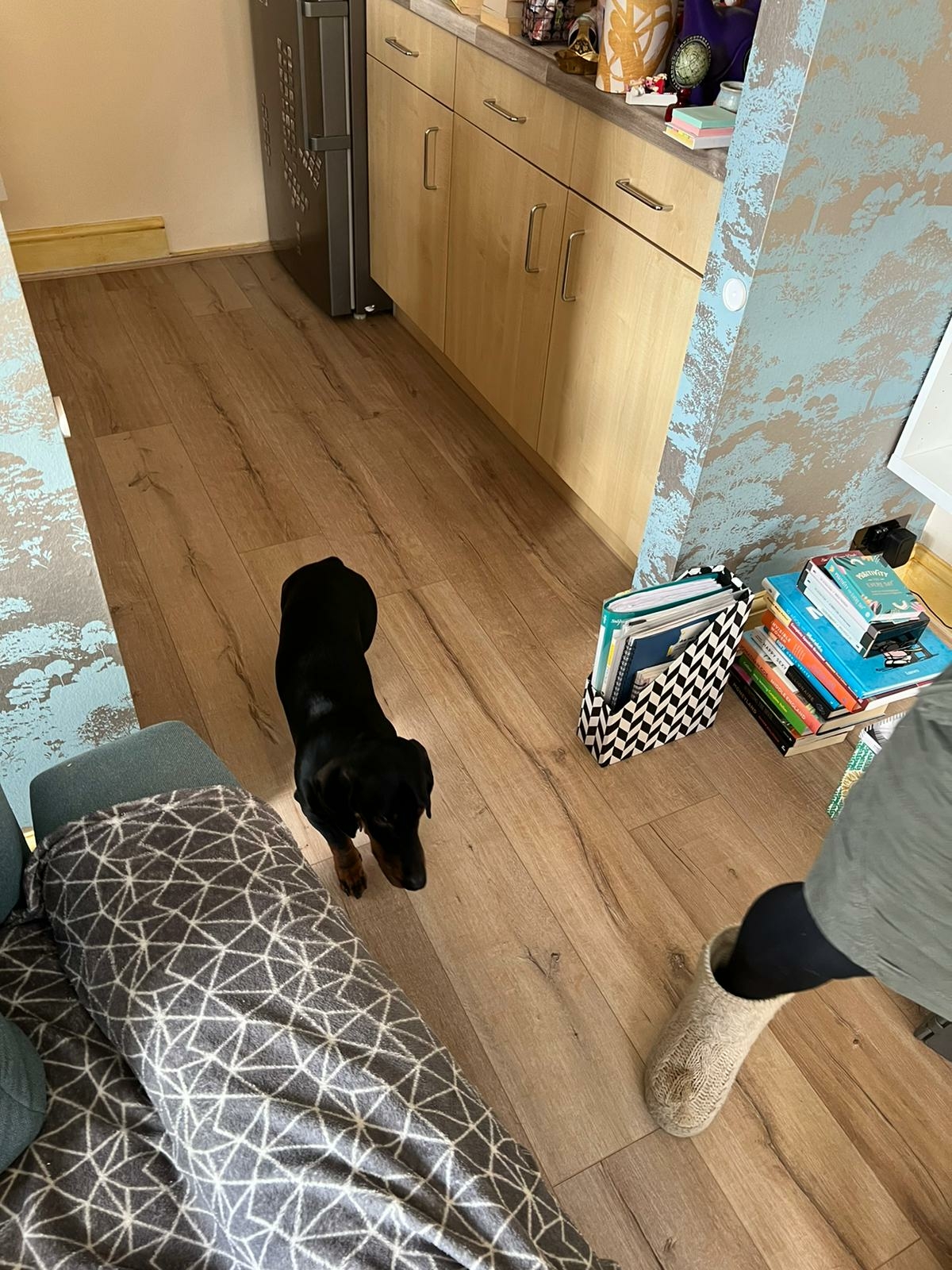
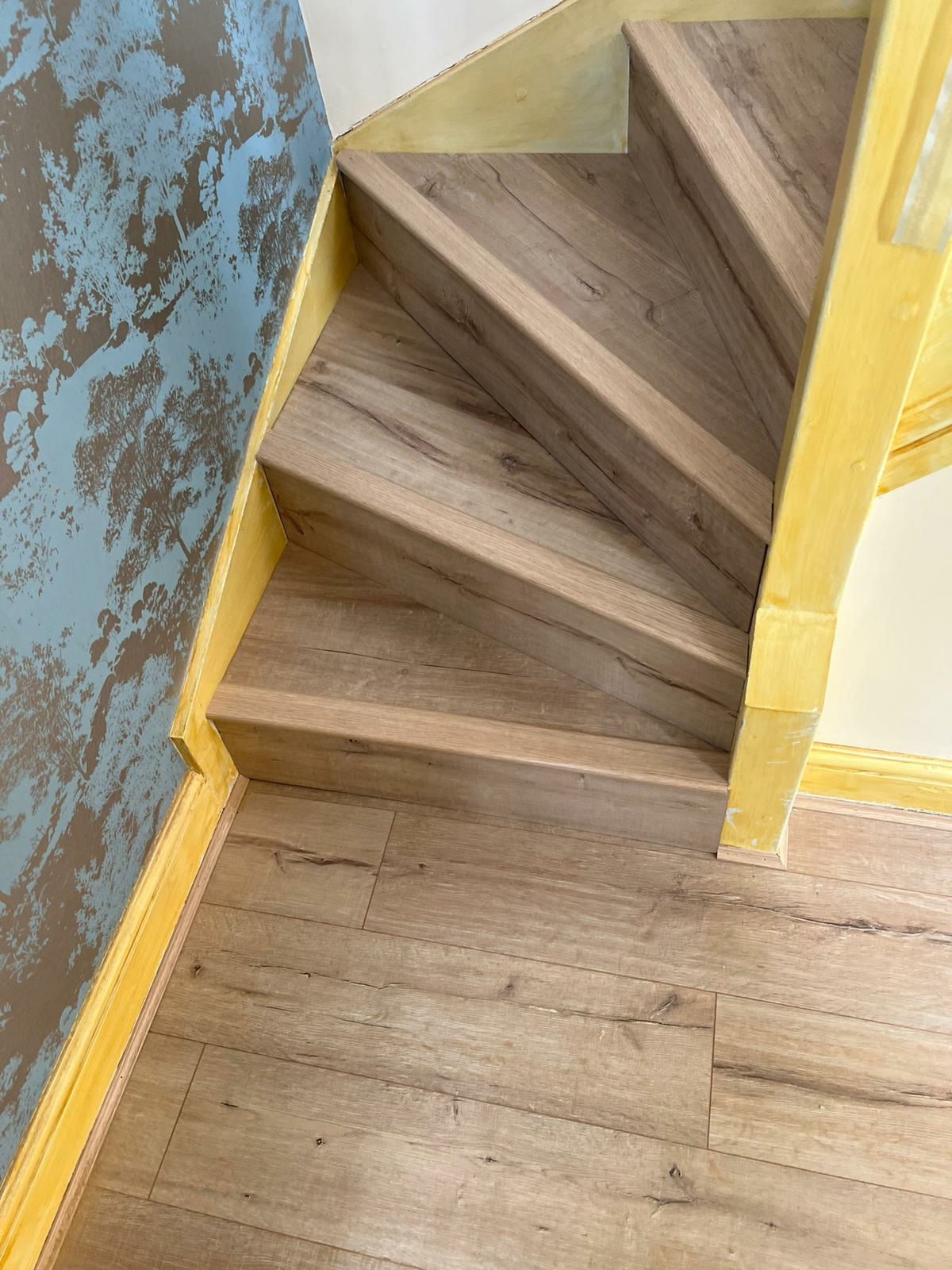
We recently completed a full laminate floor fitting project in a Victorian property on Ladbroke Grove, transforming a tired ground floor space with new engineered wood effect laminate. The client wanted a warm, durable surface that could handle the demands of a busy family home, and the existing concrete subfloor required careful preparation before installation could begin.
Work carried out
- Subfloor assessment and levelling works
- Installation of moisture barrier and acoustic underlay
- Laminate floor fitting across 45 square metres
- Skirting removal and reinstatement
- Threshold and transition strip installation
- Final inspection and aftercare advice
About the project
This Victorian terrace had an uneven concrete ground floor that had settled over the decades. Before laying any laminate, we needed to assess moisture levels, which was crucial given the age of the building and its proximity to the street. High damp readings would have compromised the new floor within months. We installed a heavy duty moisture barrier across the entire area, then fitted 12mm acoustic underlay to provide both sound dampening and additional moisture protection. The laminate itself was a mid range wood effect product, chosen for its durability and realistic appearance rather than budget alone.
The fitting process itself took three days. We worked methodically, ensuring expansion gaps were maintained around the room perimeter to allow for natural movement. Doorways presented the usual complications, particularly where the original Victorian architrave had settled at an angle. We adapted the threshold strips to meet the existing skirting board neatly, avoiding the awkward gaps you often see in older properties. The client's logistics mattered too, so we kept the main pathway clear throughout, finishing one room at a time before moving to the next.
About our Ladbroke Grove, W10 service
Ladbroke Grove covers a mixed stretch of West London, ranging from Victorian and Edwardian properties along the main avenue to converted warehouse spaces and newer developments further into the Notting Hill area. Most of the residential work we do here involves period properties where original timber floors have either been removed or are beyond practical repair. Many clients want the warmth and character of a wood floor without the maintenance demands, which is where laminate or engineered wood works well. The area's properties also tend to have solid concrete ground floors, which adds the extra step of moisture management to most projects.
We're familiar with the specific challenges of fitting in these older buildings. Walls are rarely square, floor levels slope in ways that surprise modern builders, and skirting boards often sit proud of the walls. We adjust our approach accordingly, using longer transition strips where needed and ensuring underlay is properly installed to prevent rocking or movement. Newer build properties on the estate present a different set of considerations, typically featuring concrete ground floors with damp proof membranes already in place, though these still require checking before we install anything on top.
Frequently asked questions
How much does laminate fitting cost in Ladbroke Grove?
Fitting costs typically range from 35 to 60 pounds per square metre, depending on the subfloor condition and complexity of the layout. Victorian properties with uneven floors and multiple doorways tend toward the higher end. We always provide a specific quote after visiting the site, as we can't accurately price work without seeing what we're dealing with underneath.
How long does fitting take, and what preparation is needed?
Most jobs take one to three days depending on size and subfloor work required. Before we start, the room should be cleared of furniture and we'll remove skirting boards if needed. If moisture testing shows problems or the floor is significantly uneven, we'll need additional time for remedial works. We'll discuss the full schedule with you before booking.
Will my laminate floor move or click after fitting?
If it's fitted correctly, it shouldn't. Movement usually means the subfloor wasn't level, the underlay wasn't installed properly, or expansion gaps weren't left. We use a straight edge to check the floor and ensure underlay sits flat. Most problems happen when people try to fit laminate themselves or use installers who skip the preparation work.