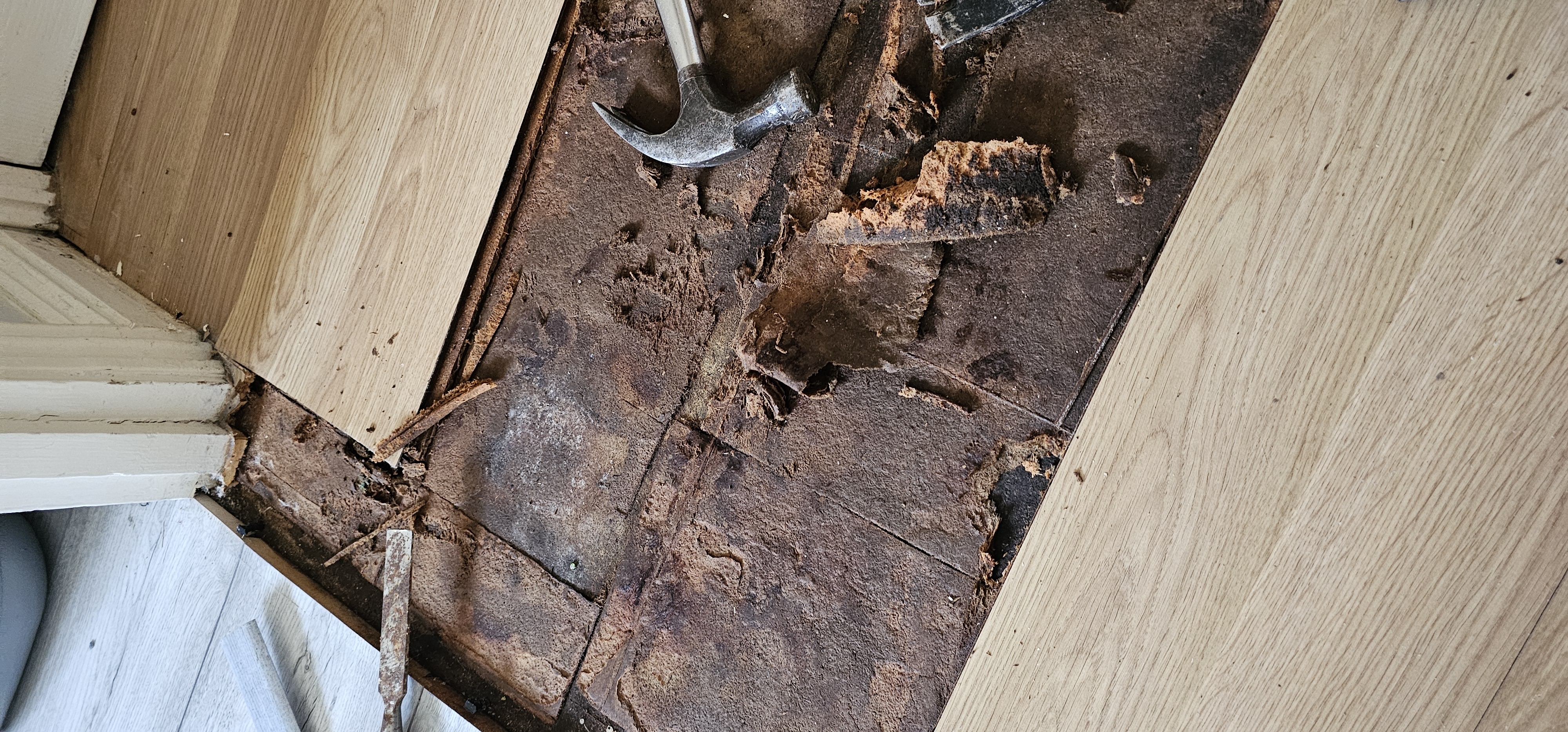
We recently fitted laminate flooring throughout a Victorian terraced property in Rotherhithe, SE16. The homeowner wanted modern, durable flooring that would complement the period features of the property whilst providing practical, low-maintenance living spaces.
Work carried out
- Removal of existing carpet and underlay
- Floor preparation and levelling
- Installation of moisture barrier
- Laminate flooring fitting across ground and first floors
- Skirting board removal and reinstatement
- Threshold and beading installation
About the project
The property had original timber floorboards that were covered with carpet throughout. When we removed the carpet, we found the underlying boards were uneven in places, with some gaps between planks where movement had occurred over time. This is typical in Victorian properties where natural timber movement is still happening after 150 years. We needed to level the floor before laying the laminate to ensure a proper foundation and prevent clicking or movement under foot once installed.
Our approach was to use self-levelling compound on the ground floor where needed, then install a moisture barrier before laying the laminate. This protects against any rising damp that can affect older properties. We fitted the flooring with appropriate expansion gaps around the perimeter and doorways, which is critical in properties like this where humidity levels can fluctuate. The entire project took five working days to complete, including furniture moving and reinstatement of skirting boards.
About our Rotherhithe, SE16 service
Rotherhithe is home to a mix of Victorian and Edwardian terraced properties, converted warehouses, and newer riverside developments. Most of the period properties we work on have solid floors with suspended timber construction above, which means different preparation approaches depending on the floor type. Many residents are updating older properties and want modern flooring without losing the character of the buildings. Laminate is a popular choice because it mimics the appearance of hardwood whilst being more practical for modern living, and it's more forgiving than solid wood in properties where moisture or temperature changes are common.
We understand the constraints of working in Victorian and Edwardian terraces, where rooms are often smaller and staircase access can be tight. We've fitted floors in loft conversions where headroom is limited, ground floor flats where moisture management is essential, and substantial family homes across multiple levels. We also work regularly in the newer riverside apartments where laminate is preferred for durability and ease of maintenance. Whatever the property type, we tailor our preparation and installation to suit the specific floor construction and the property's age and condition.
Frequently asked questions
How much does laminate fitting cost per square metre in Rotherhithe?
Fitting costs typically range from £35 to £60 per square metre, depending on the property layout, floor condition, and any complications like extensive levelling or awkward room shapes. Properties with multiple small rooms or lots of doorways tend to cost more per square metre because of the increased cutting and fitting work involved. We provide a detailed quote based on a site visit where we assess the actual floor condition and room layout.
How long does it take to fit laminate flooring?
For an average terraced property, fitting across two floors typically takes three to five working days. This includes removing existing flooring, preparing and levelling the subfloor, laying the moisture barrier, fitting the laminate, and reinstating skirting boards. The exact time depends on how well the existing floor prepares and whether any unexpected issues arise once we start work, such as damaged joists or extensive damp-proofing requirements.
What preparation is required before laminate flooring can be fitted?
The existing flooring must be removed completely, and the subfloor cleaned and inspected. We check for moisture issues using a moisture meter, particularly important in older properties. Any high spots are ground down or filled, and any low spots are levelled using self-levelling compound. A moisture barrier is installed across solid floors. Only once the subfloor is clean, dry, level, and protected is the laminate laid. Skipping proper preparation leads to problems like clicking, movement, and warping once the floor is in use.